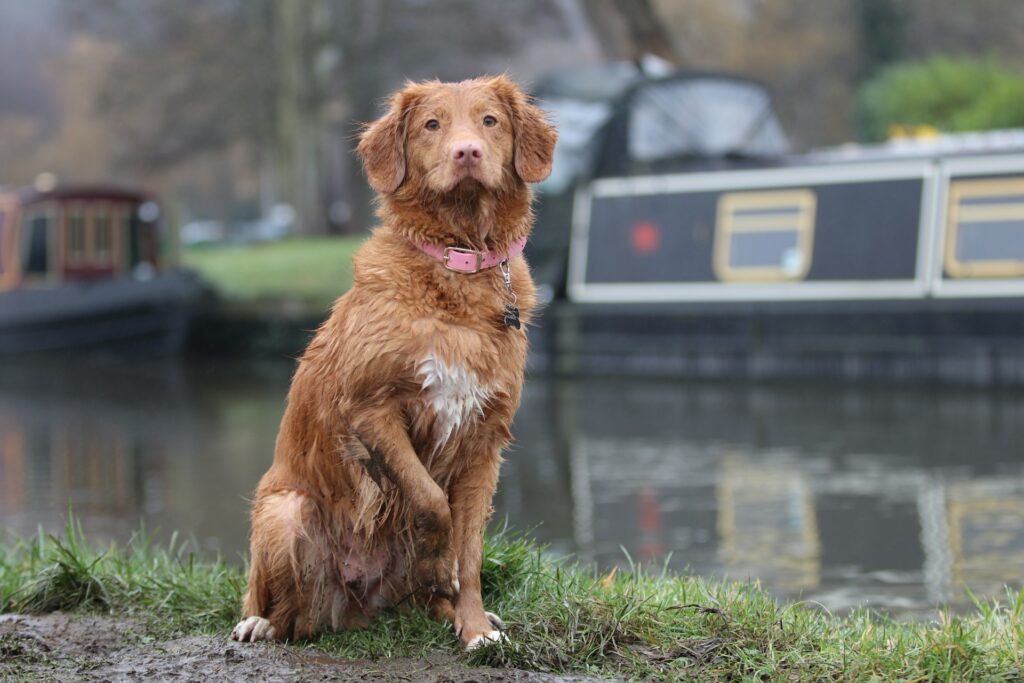
For families with a dog, organising a holiday often involves an extra decision before anything else is booked: do you bring your pet along with you, or do you need to organise alternative care while you’re away?
A canal boat holiday can make travelling together considerably easier. The pace is slower, much of the day is spent outdoors, and regular stops are already part of the journey. With a little planning, bringing a dog along can fit naturally into the routine of a narrowboat holiday.
Why Can a Canal Boat Holiday Work Well for Dogs?
Dogs generally need regular opportunities to stretch their legs, go to the toilet, and have some time outside. Canal travel naturally provides these opportunities because boats frequently stop for locks, overnight moorings, meals, and visits to nearby villages.
The towpath also means that a walk is usually close at hand. Instead of finding somewhere suitable to exercise a dog after arriving at a hotel or holiday cottage, you can often step directly from the boat onto a walking route.
This is one reason why dog friendly canal boat holidays can suit families who would rather include their pet in the trip than organise separate care at home.
How Does Bringing the Dog Change Your Daily Routine?
Travelling with a dog does require some adjustment. During cruising, somebody needs to keep an eye on where your dog is, particularly when approaching locks or moving around on deck.
Many owners find it easier to establish a simple routine from the first day. The dog can be taken for a short walk before setting off, kept safely inside or in a secure position while cruising, then walked again when the boat stops.
Lock flights can provide longer opportunities for exercise because members of the crew will already be walking along the towpath between locks. Depending on the dog and the surroundings, this can turn an operational part of the journey into part of its daily exercise.
What Should Families Pack for Their Dog?
Bring the items your dog already associates with home. Their usual bed or blanket can help them settle in an unfamiliar environment, particularly on the first night.
Food should ideally be packed for the entire trip, as well as bowls, waste bags, towels, a lead, and any needed medication.
An extra towel is particularly useful. Towpaths can become muddy after rain, and a wet dog walking straight through the cabin quickly creates more cleaning than anyone wants on holiday.
It is also sensible to carry drinking water during longer walks, even when you are surrounded by canal water. Dogs should have access to clean drinking water rather than relying on the canal itself.
How Can You Keep a Dog Safe Around the Canal?
Even confident swimmers should be supervised around the water at all times, and it is generally best to avoid allowing dogs to swim in the canal. Canal banks can be steep or reinforced with metal or concrete, which can make it difficult for a dog to climb back out. A dog life jacket can also provide extra reassurance while cruising, although it is not usually a requirement.
Locks require particular care. Water levels can change quickly, gates move, and there may be drops that are difficult for a dog to judge. Keeping your dog on a lead around locks makes it easier to keep them safely under control while the crew concentrates on operating the lock.
Before allowing your dog onto the towpath at a mooring, take a moment to check the immediate surroundings. Cyclists, other dogs, livestock and nearby roads can all affect whether it is safe or appropriate to let them off the lead.
How Can You Make the Boat Comfortable for Children and Dogs?
Space is worth thinking about before booking. A boat that technically sleeps the required number of people may feel quite different once bags, children’s belongings, and a dog bed are added.
Decide where the dog is likely to sleep and where food and water bowls can be placed without creating a trip hazard. Keeping one small area for leads, towels, and outdoor shoes can also stop mud travelling throughout the cabin.
For younger children, clear rules help too. They should know when the dog needs to be left alone, particularly while eating or sleeping after a long day.
Why Can Taking the Dog Make a Family Holiday Easier?
Leaving your dog at home introduces another arrangement into the holiday, often with additional cost and fixed collection times at either end.
Bringing them along removes that part of the planning and means the whole household can share the trip. Canal holidays also provide plenty of activities that dogs can join, including country walks, towpath strolls, and stops at outdoor attractions or dog-friendly pubs.
The result can be a fairly natural style of family holiday. Days develop around travelling, walking, stopping and exploring, rather than trying to fit the dog's needs around a tightly organised itinerary.
What Should You Check Before Booking Dog Friendly Canal Boat Hire?
Check the individual operator's pet policy rather than assuming every boat accepts dogs. Find out how many pets are permitted, whether there is an additional charge and whether any restrictions apply.
It is also worth looking at the boat layout. Entrance steps, flooring, and available cabin space can make a difference, particularly with an older dog or a large breed.
Finally, consider the route itself. A comfortable cruising distance with plenty of suitable stopping places usually gives families more flexibility. If your dog needs an extra walk or the children want more time ashore, you can adjust the day without constantly chasing the next destination.